 By sion932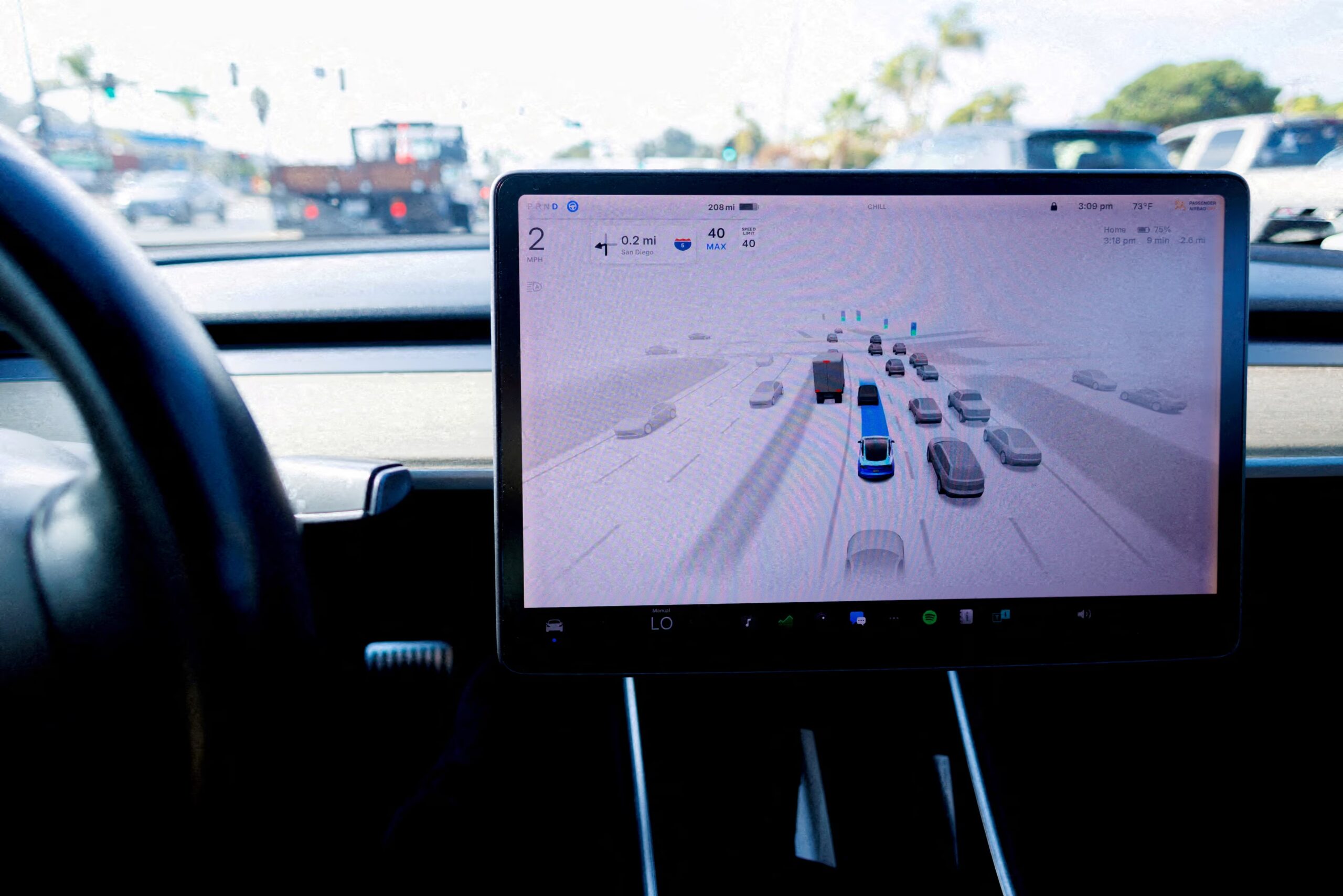
- Recently, the U.S. government announced several proposals aimed at accelerating the development and deployment of autonomous vehicles.
- Are self-driving cars ready for the road?
- A new white paper from the World Economic Forum analyzes the readiness of private cars, autonomous taxis, and self-driving trucks over the next decade.
The US and UK governments have recently announced their projected timelines for the rollout of self-driving cars. Last month, the US government indicated plans to accelerate the deployment and adoption of autonomous vehicles. These proposals would exempt certain self-driving cars from some safety requirements, such as rearview mirrors, and adjust regulations related to accident and collision reporting.
Meanwhile, the UK government has pushed back its estimated timeline for approving fully autonomous vehicles on public roads from 2026 to the second half of 2027.
But what exactly are self-driving cars? Which countries are leading the way? And what does the future hold?
What are self-driving cars?
The US National Highway Traffic Safety Administration (NHTSA) uses the term “automated driving system” to refer to vehicles that no longer require a traditional driver. The NHTSA explains that these vehicles are also often referred to as automated vehicles.
The NHTSA also adds that, according to industry standards, the term “self-driving” is not used when discussing higher levels of automation, because “it describes the operating state of the vehicle, not necessarily its capabilities.”
Automation is, of course, a continuous process, and the products available to consumers will evolve as technology and regulations develop. A new white paper published by the World Economic Forum in collaboration with Boston Consulting Group categorizes advanced driver-assistance systems (ADAS) and autonomous driving (AD) systems into six levels.
The Most Likely Types of Vehicles to Achieve Autonomous Driving
This white paper, titled “Autonomous Vehicles: Timeline and Future Roadmap,” identifies the three most critical application scenarios for the coming years: private cars, autonomous taxis and shuttles, and autonomous trucks.
The authors explore the potential development and evolution of these three scenarios in the next stages. Importantly, they emphasize that, due to technological, regulatory, and economic challenges, the application process will be more gradual than previously anticipated in various parts of the world.
Private Cars
In terms of volume, private cars represent the largest market segment for autonomous vehicles. However, the white paper finds that automation will be a gradual evolution rather than a revolution.
According to the levels listed in the diagram above, private cars are likely to benefit from advanced driver-assistance features rather than fully autonomous driving. By 2030, L2 and L2+ level technologies are likely to dominate in new cars.
“For a long time after 2035, most drivers of new cars will still need to keep their hands on the steering wheel and their eyes on the road,” the authors write. Therefore, unfortunately, you can’t yet relax in the back seat.
The key reasons for this are cost, regulation, and market supply. Achieving L4 autonomous driving “remains severely limited by technological and regulatory hurdles.”
Autonomous Taxis and Shuttles
In this application scenario, autonomous taxis and shuttles have already accumulated significant mileage, and deployment is progressing in multiple cities in the United States and China.
However, this does not mean that the further widespread adoption of these vehicles will not face challenges similar to those of private cars, including regulatory differences across cities, complex operational requirements, and substantial investment needs.
The white paper predicts that by 2035, a large number of autonomous taxis will be operating at scale in 40-80 cities. China and the United States are expected to dominate urban deployments, with opportunities also emerging in Europe and the Middle East.
Autonomous Trucks
The white paper states that autonomous trucks will “transform the logistics industry.” Their development is already well underway, particularly in testing and early commercial applications in the United States and China.
There are strong economic reasons for using autonomous trucks, such as improved efficiency through 24/7 operation, addressing driver shortages, and reducing total cost of ownership. While deployment varies depending on the specific application scenario, for routes between intermediate transportation hubs, autonomous trucks are expected to account for nearly 30% of new truck sales in the US by 2035. Fixed highway routes that allow for automated driving are key to achieving this goal.
The United States and Europe will again be at the forefront. The report also warns that a pan-European regulatory approach will be crucial if Europe is to fully capitalize on the advantages.
Outlook
As the data shows, in the coming years, key markets such as the United States, China, and Europe will play a leading role in the deployment of autonomous vehicles. While much of the focus is on self-driving cars, widespread adoption of autonomous taxis/shuttles and autonomous trucks is currently more likely.
This white paper identifies five key areas that will influence these predictions and the deployment and use of these vehicles:
Consumer trust and interest in ADAS/AD systems; predicted prices and consumer willingness to pay; technological barriers and the timeframe for overcoming them; current regulatory landscape and anticipated regulatory developments; and the development of a supportive ecosystem for scaling up.
To fully realize the potential of autonomous driving, multiple stakeholders, from regulators to suppliers, need to collaborate. The white paper concludes: “Autonomous driving is not a short-term race, but a long-term transformation requiring sustained investment and cross-industry collaboration.”
This article was originally published on the World Economic Forum Agenda blog.